

By Janna Xu, Senior Research Data Curator, Research & Data Services
Privacy-preserving data processing is becoming increasingly critical in research workflows, yet research data is rarely in a neat and low-risk form. Interview transcripts or survey exports may contain names, email addresses, organisation names, locations and personal histories that make respondents identifiable. Some administrative datasets may be valuable for research, but difficult to share, analyse or test because the data is sensitive by design. For researchers, this creates a familiar headache: how do we preserve the analytical value of data while reducing privacy risk, meeting ethics and governance regulations, and keeping research workflows moving?
Cloak, developed by GovTech, is one answer worth trying. It is positioned as a whole-of-government data privacy toolkit that helps users apply privacy-enhancing technologies to data for policy analysis, operations and GenAI use cases. More importantly for researchers, it does not treat anonymisation as a single technical task. Cloak brings together several practical modes of privacy work: tabular data anonymisation, free-text anonymisation, mock data generation, API integration and an offline Python anonymiser package for selected use cases.
Why this matters for your research
It helps when you want to:
- prepare datasets for analysis while masking direct identifiers or encrypting in-direct identifiers;
- reduce re-identification risk before sharing a dataset with collaborators;
- clean interview transcripts before coding or text analysis;
- create mock datasets for training research assistants or testing code;
- prepare lower-risk text for exploratory GenAI workflows;
- integrate anonymisation into a repeatable research data pipeline.
What Cloak does and how it can help with your research
Cloak is a central privacy-preserving toolkit available through a web interface for everyday users and through APIs for integration into platforms, pipelines and workflows. It is available free of charge to SMU users.
Its main capabilities include:
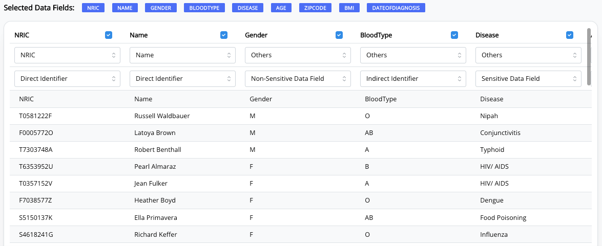
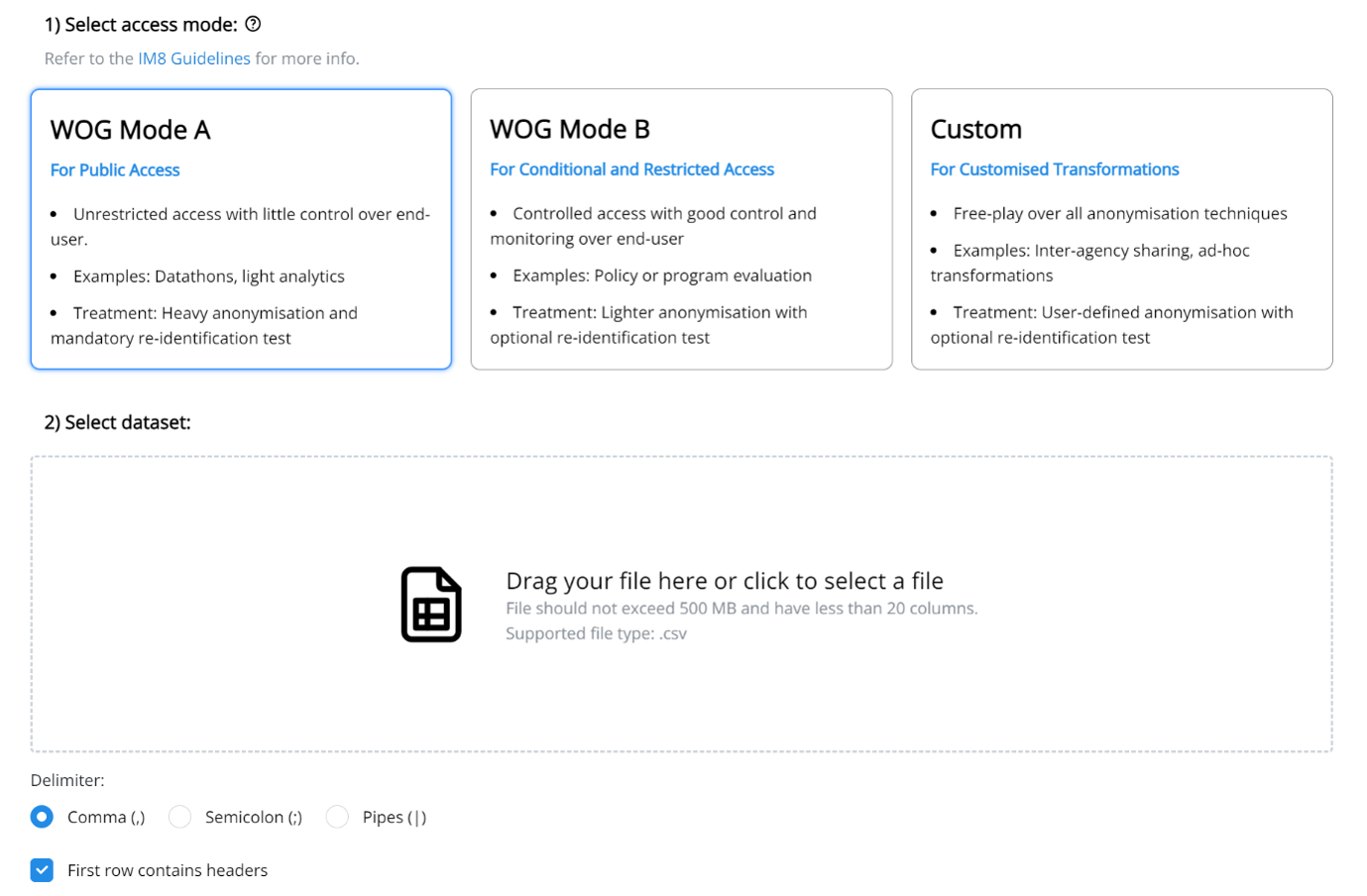
- Tabular data anonymisation: Cloak allows users to upload structured datasets and tag each data field by information type and sensitivity type, and then apply suitable anonymisation or transformation techniques. After the data is tagged, Cloak can provide recommendations on the transformations to apply and help users assess the privacy and utility score of the transformed dataset. This is useful for researchers working with survey exports, administrative records or respondent-level datasets, as it supports a more systematic review of direct identifiers, indirect identifiers and sensitive fields.
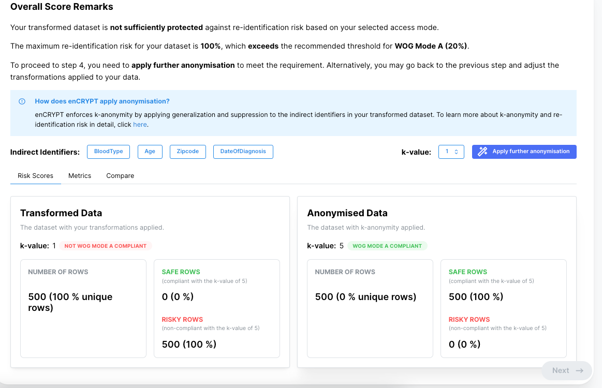
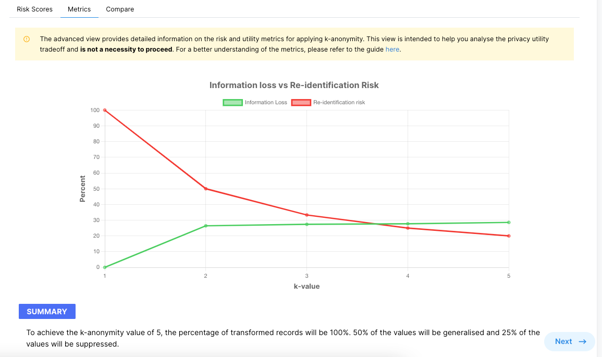
Cloak also supports k-anonymity checks, which can help researchers think through re-identification risks before sharing or reusing data.
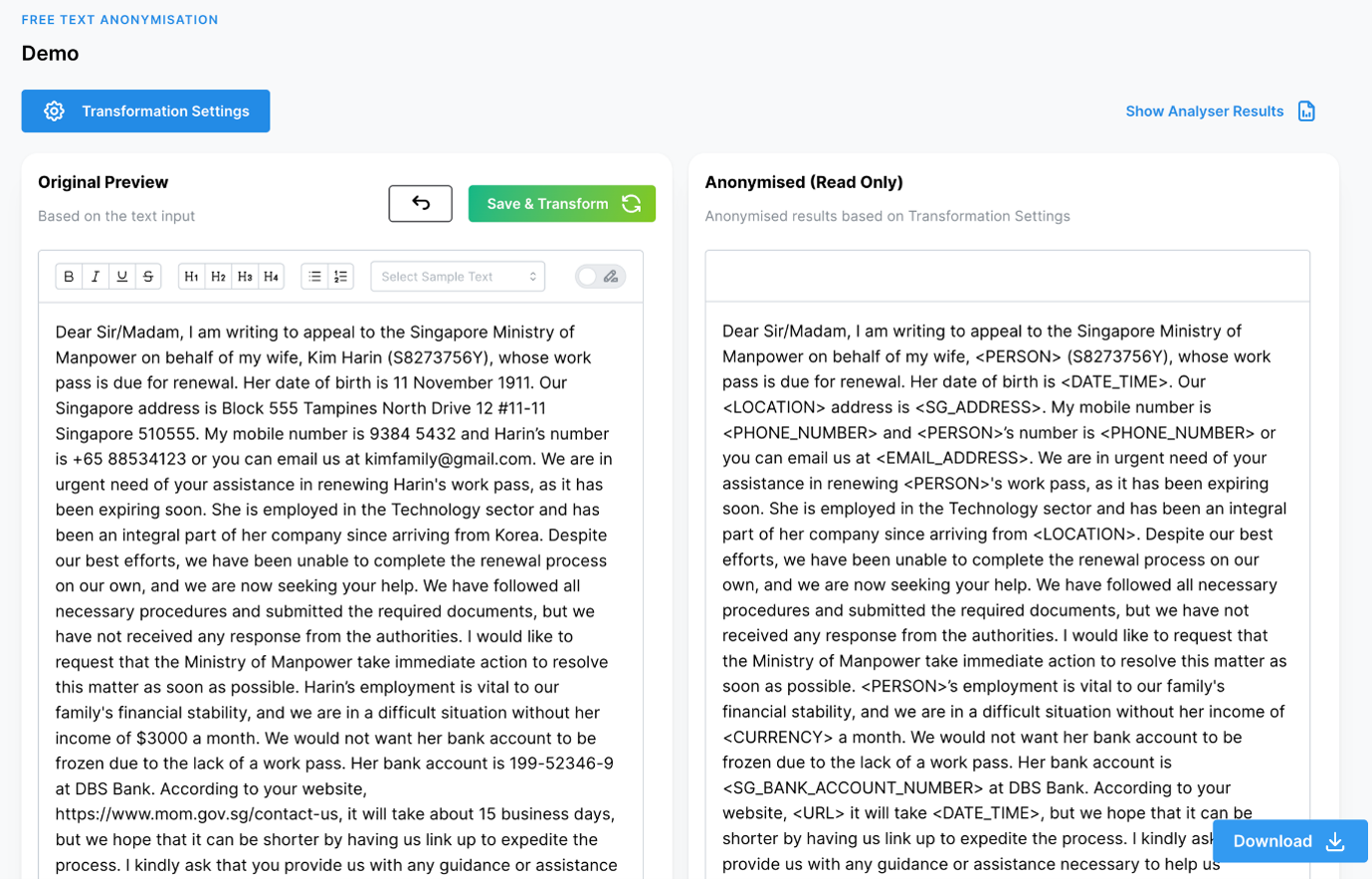
- Free-text anonymisation: Cloak’s free-text anonymisation feature is built on top of Microsoft's Presidio Data Protection and De-identification SDK, which employs a mix of AI models, pattern matching and context recognition. Further optimisation and localisation features are added to ensure that the analyser can better detect data fields specific to Singapore's context. This is especially relevant for interview transcripts, focus group notes, emails, open-ended survey responses or other qualitative materials. The transformation interface also allows users to preview the original text alongside the anonymised output, making it easier to check whether the anonymisation is appropriate before using or sharing the text.
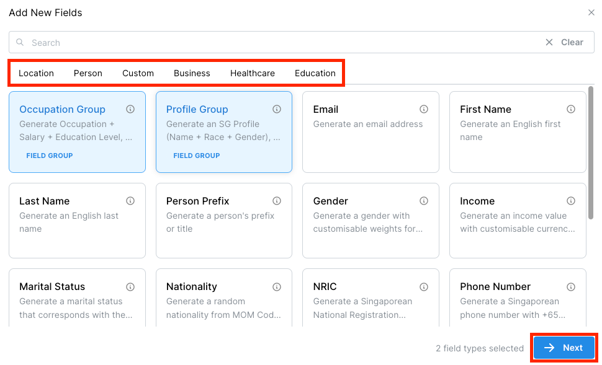
- Mock data generation: Cloak’s mock data generation feature can help by creating realistic-looking datasets that follow the structure and format of real data, without using the real data itself. This can be useful when testing analysis workflows, preparing training materials, demonstrating a method in class, or letting research assistants practise with data before they handle sensitive records. Cloak also includes Singapore-specific fields, such as local person, business, location, healthcare and education fields, which makes the mock data more relevant for local research contexts.
- API access: Cloak’s REST API allows tabular and free-text anonymisation capabilities to be integrated directly into applications, platforms and repeatable data pipelines. This is useful for research teams or centres that handle recurring datasets and want anonymisation to become part of a standard workflow rather than a manual, one-off step. Cloak provides APIs at various security levels:
- L2 (Existing integrated systems such as Analytics.gov)
- L3 (System-to-system integration for your systems in AWS GCC and Azure GCC)
- L4 (Internet access with Signature)
- Python anonymiser package: Cloak Anonymiser provides a standalone Python package for policy-based tabular data transformation. It is designed for cases where users cannot use the Cloak web UI or API efficiently, such as selected offline or on-premise workflows. The package applies transformations based on each column’s information type, sensitivity type and data type. However, the package supports only tabular anonymisation and does not include k-anonymity, so it should be used with a clear understanding of its scope.
Where Cloak stands out
There are already capable anonymisation and privacy tools in the ecosystem. ARX, for instance, is a comprehensive open-source tool for privacy-preserving microdata publishing, with privacy and risk models, transformation methods and utility analysis. Amnesia focuses on turning personal data into open statistical data with formal privacy guarantees and a user-friendly interface.
Cloak is not simply “better” than these tools. Its value is more specific: it is designed around Singapore public-sector data governance and practical operational adoption. Specifically, it has met IM8 requirements around application development security and risk management for government data classified up to Confidential Cloud-Eligible and Sensitive-High, and this is not the same value proposition as a general-purpose open-source anonymisation package. How does it work? Generally, the anonymiser package applies transformations based on a column’s information type, sensitivity type and data type. This is useful because research teams often struggle not with one transformation, but with deciding which transformation is appropriate for which field.
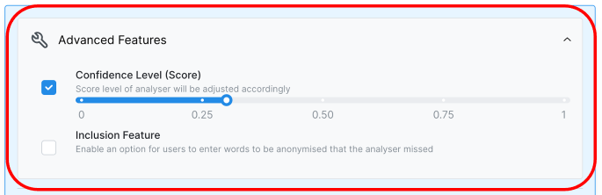
In addition, Cloak extends beyond traditional statistical anonymisation by incorporating AI-powered free-text anonymisation, allowing it to automatically detect personally identifiable information (PII) across unstructured data formats without requiring extensive manual tagging. Users could toggle the Confidence Level (Score) and Inclusion Feature under Advanced Settings.
Cloak is also designed with security controls that matter for sensitive research data. Uploaded data is processed transiently in the Government Commercial Cloud, with raw data purged after anonymisation and anonymised data purged within 24 hours or upon request. Data is encrypted in transit and at rest, while privileged access, vulnerability assessments, penetration testing, and the use of salts or secret keys are subject to regular review and audit.
How to set it up
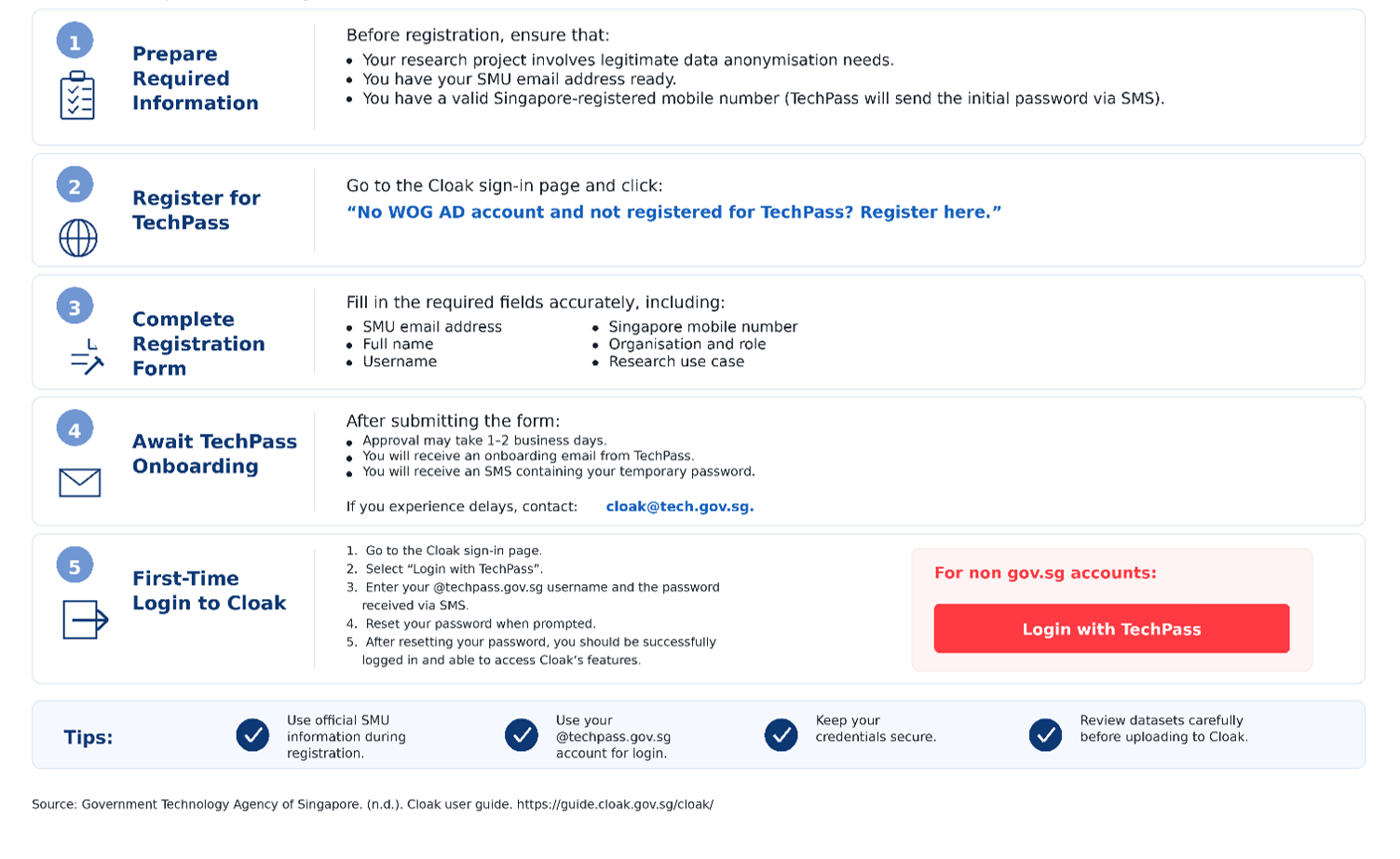
Follow the steps below to register for TechPass and access Cloak for free.
What researchers should still be careful about
Cloak should be treated as part of a research data governance workflow, not a magic eraser.
Anonymisation always depends on context. A dataset may contain no obvious names or phone numbers and still be re-identifiable because of rare combinations of attributes, small populations, event descriptions or external knowledge. Free-text anonymisation also requires care because personal information can appear indirectly through relationships, roles, locations or unusual life events. It is therefore recommended to apply anonymisation techniques alongside careful contextual review and appropriate methodological judgement.
K-anonymity, PII redaction, synthetic data and differential privacy solve different problems. A tool that masks identifiers may not provide the same guarantee as a differentially private statistical release. A synthetic dataset may support software testing but may not be suitable for every inferential claim. Cloak’s advantage is that it gives researchers a practical place to begin, but method choice still needs research judgement.
Have questions regarding to Cloak, please contact me at jannaxu@smu.edu.sg. I am more than happy to help.
References
Cloak guide: https://guide.cloak.gov.sg/cloak