
By Aaron Tay, Head, Data Services
On 22 January 2026, SMU Researcher Club, in collaboration with the College of Graduate Research Studies and SMU Libraries, hosted a structured dialogue exploring how researchers integrate AI into their workflows. The panel discussed practical experiences with AI tools spanning writing assistance, coding copilots, data analysis and visualization, and research data management.
Panelists included Shin Kayoung (NTU PhD candidate), Leow Yi Jin (SMU PhD candidate), Assoc Prof Tamas Makany (Associate Provost for Teaching & Learning Innovation, Director of Centre for Teaching Excellence), Dr Anders Moeller (NUS PhD graduate), and Seow Wei Yeng (AI Lead, SMU IITS). The session was moderated by Dr Pak Hui Ying, Senior Research Fellow from CIS.
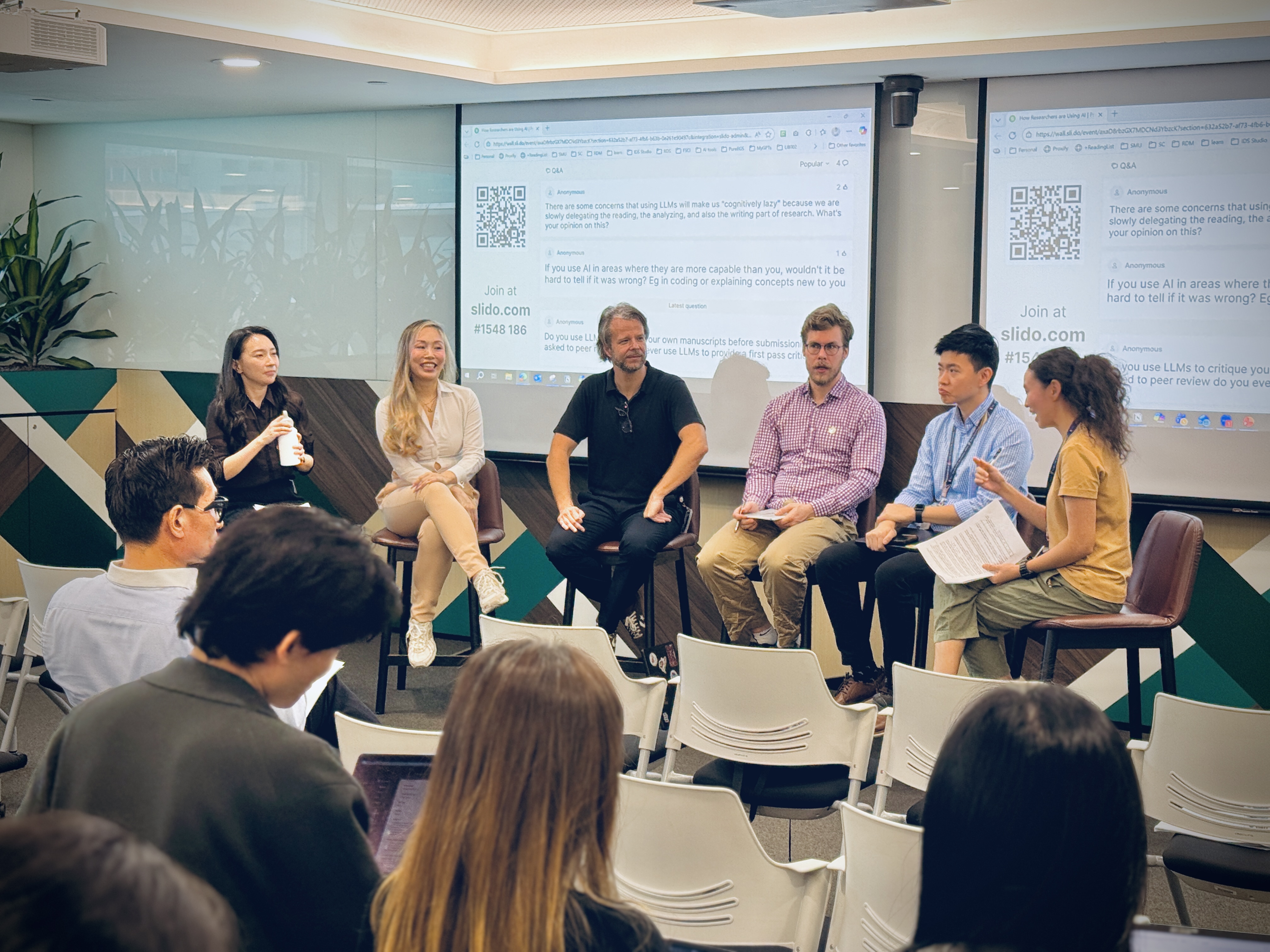
Rather than debating AI's merits, the dialogue focused on understanding the diverse and evolving relationships researchers are forming with these emerging tools.
The session opened with panelists sharing how they currently integrate AI into their workflows. and she found that the ChatGPT Pro account makes less mistakes in analysis. Kayoung relies on ChatGPT to assist with coding for analysis, data exploration, and refining research questions. Anders uses NotebookLM's podcast feature to skim interesting articles quickly, identifying which ones merit deeper reading. Prof Tamas employs Gemini to transcribe audio recordings. Wei Yeng shared how he leveraged AI to create a prototype dashboard that could help researchers in SMU discover active grants based on their research topics.
The discussion then turned to critical questions: when does AI truly add value to the research process, and what trade-offs or ethical concerns arise? Anders noted a growing interest among academics around the concept of 'slow research' and highlighted concerns around 'AI slop'. Audience members contributed actively, sharing how AI has transformed their thinking, writing, and collaboration with peers.
Some admitted they can no longer code without AI assistance, while others noted that AI has accelerated their learning process for programming and significantly reduced the time spent reading and comprehending literature or generating new research ideas. Throughout the dialogue, various tools were highlighted, including NotebookLM, Undermind, Gemini, and ChatGPT.
Ultimately, the panelists agreed that the key isn't whether to use AI, but how to use it strategically—by understanding its limitations, verifying its outputs, and ensuring it serves research goals rather than directing them. Researchers are neither uncritically adopting nor categorically rejecting AI tools, but rather thoughtfully experimenting to find what enhances their work while maintaining research integrity.
After the structured dialogue, attendees continued the conversation during networking and impromptu discussions, sharing their experiences and perspectives on AI in research.
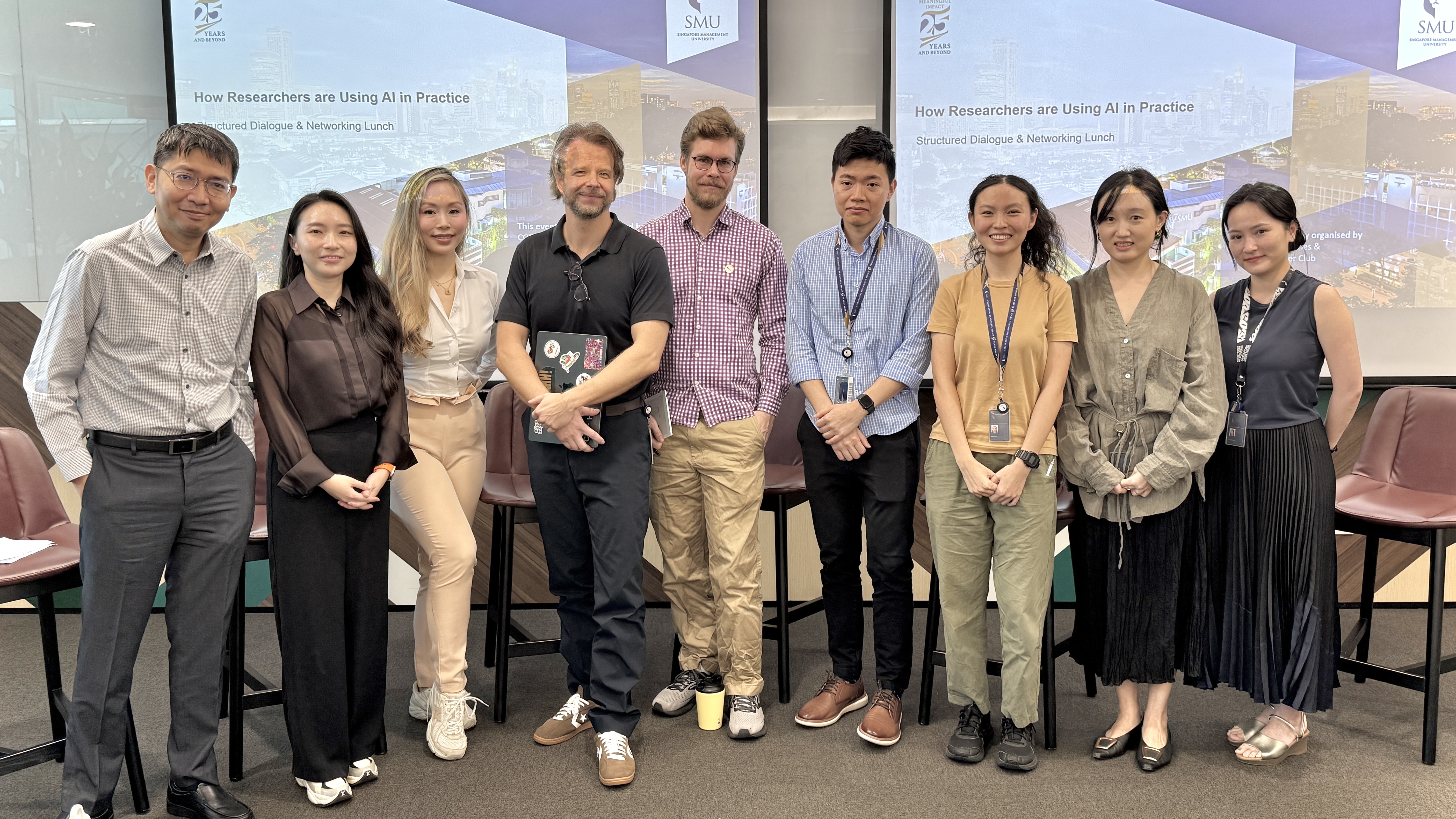
We hope to see you at the next SMU Researcher Club event!