

By Ooi Kooi Cheng, Senior Librarian, Collection Management & Strategies & Bella Ratmelia, Senior Librarian, Research & Data Services
Discover API-enabled databases available through SMU Libraries and learn how to integrate them into analytical, computational, and AI-assisted research projects.
SMU Libraries has refreshed how you find and use databases that offer API access; programmatic ways to retrieve and work with content at scale, rather than one search at a time. Our subscriptions have grown, the newly redesigned A-Z Databases interface makes API-enabled resources far easier to spot, and our companion API Guide has been fully updated. Here's what's new and how to get started.
APIs are now available across a wide range of library resources — scholarly literature, citation databases, business and financial data, news archives, and research-analytics tools. They let you retrieve information programmatically for data collection, computational analysis, text and data mining, or AI-assisted research.
Finding Databases with API Access
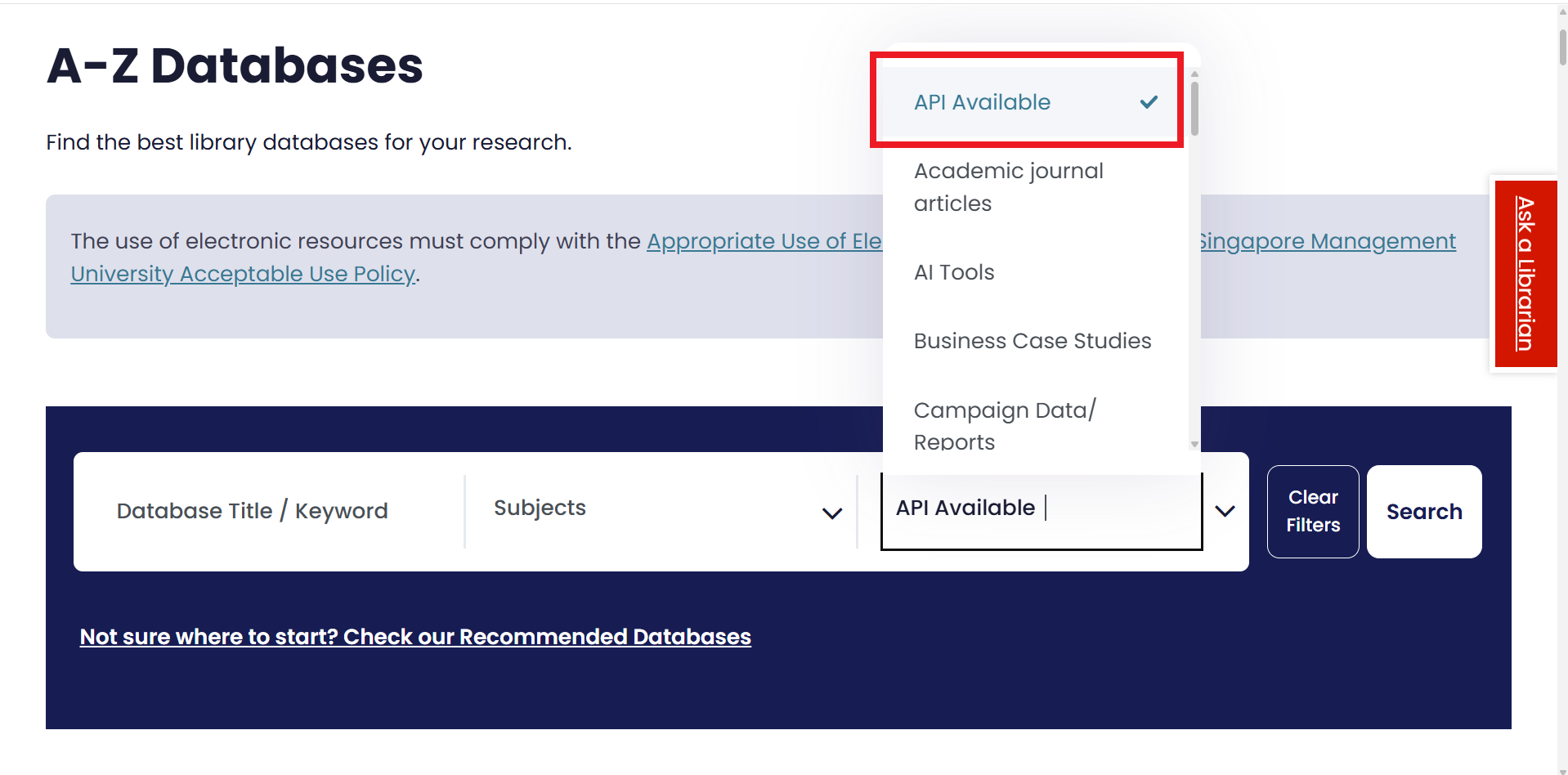
The easiest way to identify databases that support APIs is through the Library's A-Z Databases List.
- Visit the A-Z Databases page.
- Select the "API Available" tag (filtered list) to see only databases that support programmatic access.
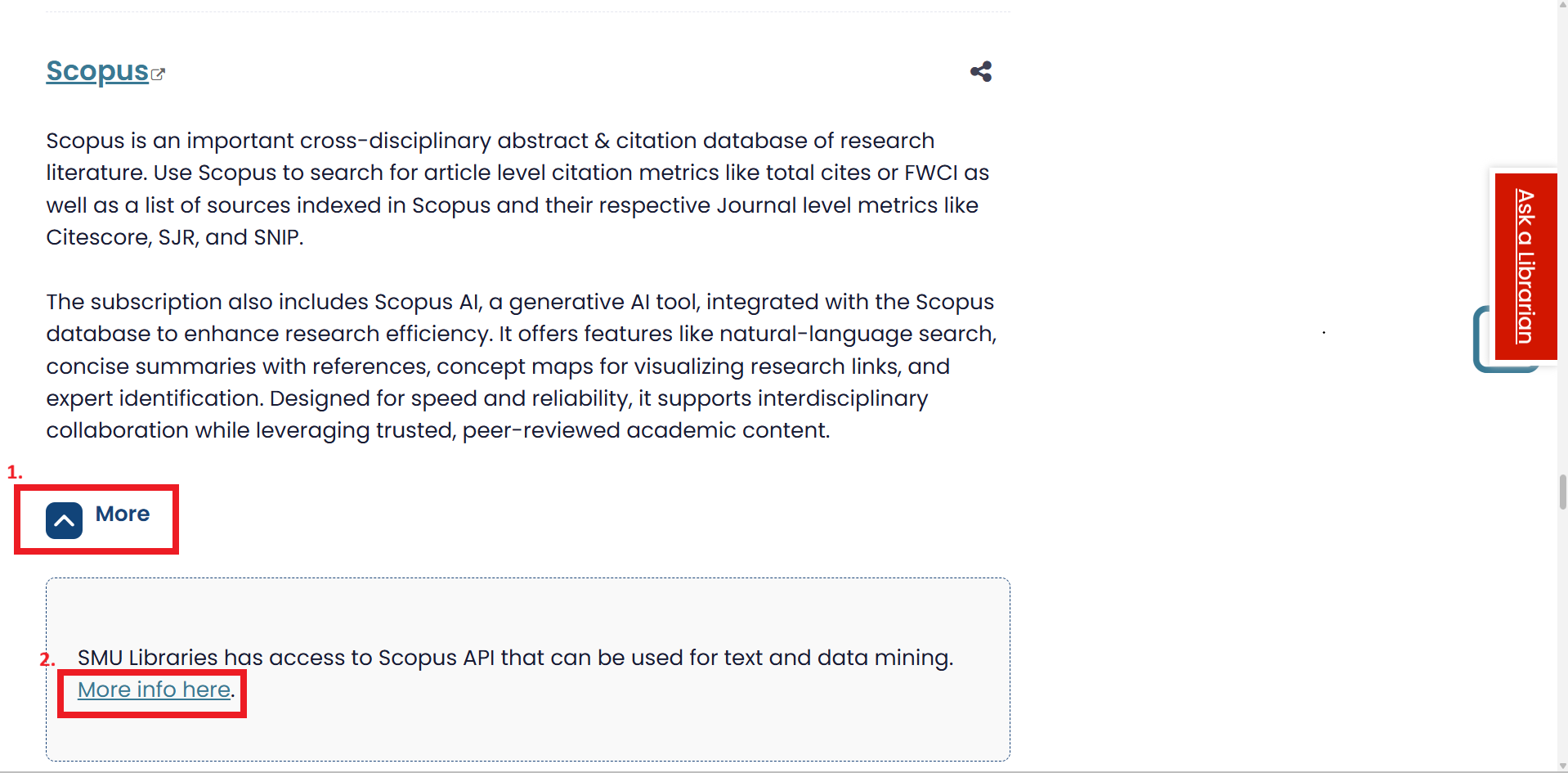
- Click on "More" under the Database description then for link to instructions to access the API under "More info here".
The list is updated regularly as new resources and API services become available.
Getting the details you need
Each database has its own access requirements, authentication methods, usage limits, and documentation. To help researchers get started, SMU Libraries maintains an API Guide that brings together:
- Which APIs are available, by database
- Registration and key requirements
- Access and authentication information
- Technical setup instructions
- Known limitations and usage considerations
A note on responsible use: API access is governed by each provider's licence terms, including limits on how much you can retrieve and how the data may be used. The API Guide notes these where known, and we're happy to advise on staying within your entitlements. When in doubt, ask us before running a large job.
Using Library Resources with AI and MCP-enabled Tools
As AI tools become part of the research process, APIs allow library databases to be integrated directly into these workflows. This makes it easier to retrieve information, automate data collection, and work with trusted research content.
A newer standard, the Model Context Protocol (MCP), makes these connections more seamless by letting AI assistants (such as Claude or ChatGPT) talk to external data sources in a consistent way. This isn't just on the horizon — you can try it today. Our new MCP-Enabled Resources page walks you through connecting AI tools to research databases that already support it, including Scite, Undermind, and Consensus.
SMU Libraries is actively monitoring developments in MCP and related technologies. As database providers introduce MCP support, we will explore opportunities to enable these capabilities and help researchers make better use of trusted library resources within AI-assisted workflows.
Getting started — and we'd love your feedback
Ready to try it? Browse the "API Available" databases in the A-Z list to see what's on offer, then head to the API Guide for access and setup details on any resource that fits your work.
Need help, or have comments about the new API Guide or A-Z interface? Contact us! We'd love to hear what's working and what you'd like to see next.